Buying Guides
How to Layer a Bed: Fitted, Flat, Duvet and Throw
A well-made bed is four functional layers, not a styling trick. Here is what each layer does, the order to build them, and the seasonal swaps that keep the stack comfortable from summer to winter.
By Ruth Alder · ·
A bed made well is a system of four functional layers, each washable on its own schedule: fitted sheet, flat sheet, duvet, throw. The order is not styling — each layer earns its place by being the one you wash at a different frequency. Build the stack in that order and the bed adapts to every season without a full remake.
Layer 1: the fitted sheet, the working base
The fitted sheet is the layer your skin touches nightly and the one washed weekly. Size it to the mattress depth, not just width — a standard-depth sheet on a 14-inch pillow-top mattress pops corners nightly, a sizing problem, not a quality one. If the mattress sits tall, deep-pocket sheets with strong elastic go on and stay on. Material choice shows here first: percale reads crisp and cool, sateen smoother and warmer — our percale picks cover the crisp end.
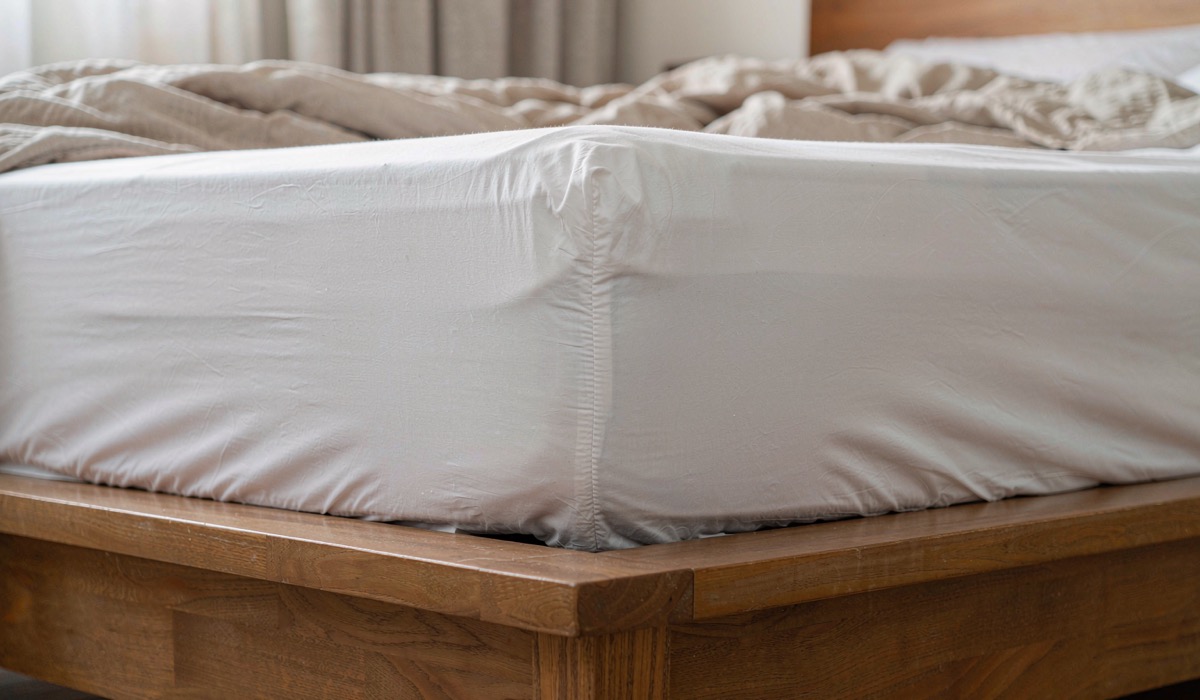
The fitted sheet does the nightly work, so it gets washed weekly.
Layer 2: the flat sheet, the adjustable one
The flat sheet is the layer people argue about, and both camps are right. Its job: a washable barrier between you and the duvet cover, plus a mid-weight option for nights the duvet is too much. Keep it if you run warm, sleep with a partner who runs cold, or would rather wash a sheet weekly than wrestle the duvet cover monthly. Skip it if you wash the duvet cover often and prefer fewer layers — the European style. There is no correct answer, only a maintenance preference.
Layer 3: the duvet, the thermostat
The duvet does the temperature work, and its insert is a warmth rating you choose, not a stylistic one — our duvet insert guide covers warmth levels and fills. The duvet stays folded back at the top third in the evening and covers you at night, keeping the sheet clean. Duvet insert weight is the seasonal switch: lighter fill or a coverlet for summer, the heavier insert swapped in around October. Layering means you adjust the top layer only — the sheets below stay constant.
The cover you put on the duvet decides how much the layer costs you in effort. A cotton cover in percale or sateen washes and dries like an oversized sheet; a heavy textured cover in linen or washed canvas takes longer to dry and wrinkles into its own storage. Whatever the material, a cover with corner ties and a full-length button or zipper closure keeps the insert from drifting into a lump at the foot — an untied insert migrates nightly, and a lumpy duvet gets read as a worn one.
Layer 4: the throw, the foot-of-bed finisher
The throw or coverlet drapes across the bottom third: foot warmth for cold nights without a full re-layer and a surface to sit on. Its contrast in texture is also what makes the bed read as finished — a nubby weave against percale, a wool throw against sateen. It gets washed seasonally rather than weekly, which is what keeps the weekly routine fast.
The laundry schedule each layer sets
The layers exist partly so each one can be washed at the frequency its job demands, and the schedule writes itself once the jobs are clear. Fitted and flat sheets go weekly — they take the nightly skin contact. Pillowcases ride along with the sheets. The duvet cover, which sits behind the sheet, runs on a monthly cycle, and the protector under the fitted sheet comes off in the same monthly wash. The throw gets washed seasonally; the duvet insert itself only when a spill or a season demands it.
This is the practical argument for the whole system. A bed where everything needs the same wash is a bed where the bulky items end up laundered weekly or the sheets end up laundered rarely. Splitting the stack by frequency keeps the weekly routine to two minutes of stripping and a single load, and the off-season duvets go into sealed storage — the method in our linen closet organization guide.
The folds that hold
Two folds do most of the work. The hospital fold tucks the flat sheet and duvet edge together at the foot of the mattress, then folds the top back at an angle — it keeps layers from sliding apart all night. For the top-of-bed finish, fold the flat sheet back over the duvet by 8 to 10 inches so the cuff reads as a deliberate border. Pillows last: two sleeping pillows per sleeper in protectors and cases, and no more than three decorative cushions — anything beyond that comes off the bed nightly and lands on a chair forever.
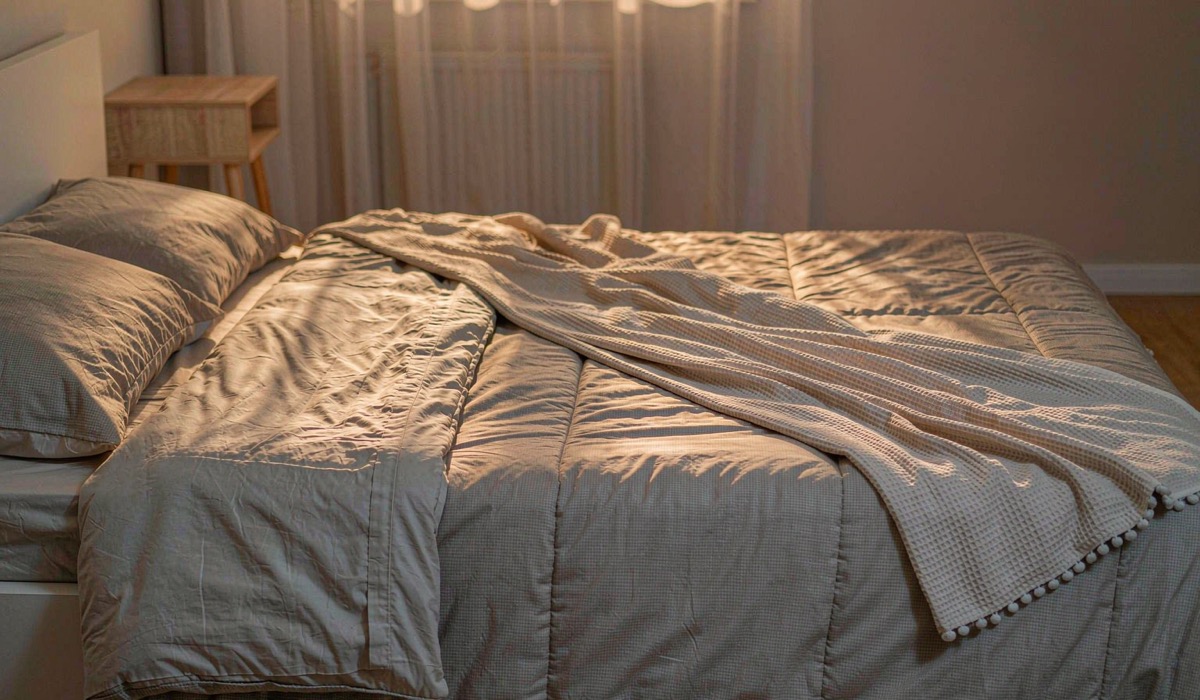
The throw finishes the foot of the bed and warms cold nights.
The stack without a flat sheet
Skipping layer 2 is a legitimate setup, and the rest of the stack does not change. The order runs protector, fitted sheet, duvet with insert, throw — the same four jobs with one removed. What changes is the wash load: the duvet cover now takes the skin contact the flat sheet used to absorb, so its monthly cycle becomes every two weeks for most people. If that trade does not appeal, the flat sheet has earned its shelf space.
The hospital fold still works without the sheet — tuck the duvet edge alone under the foot of the mattress. The bed reads thinner and more minimal, which some people are chasing anyway.
Seasonal swaps, not full remakes
Run the same four layers year-round and adjust the top two: summer drops to fitted plus a flat sheet or light coverlet; winter adds the full duvet and the throw. Off-season duvets stay sealed and dry in storage. If the stack feels shabby rather than layered, the culprit is usually worn base layers — our pillow replacement guide covers the fastest-aging item of all.
The same logic handles the middle of the night. A bed that runs warm at 3 a.m. needs a layer you can move without waking fully — push the duvet to the foot and sleep under the flat sheet, then pull it back up half an hour later. Beds that run cold get the reverse: the hospital fold keeps the sheet and duvet attached, so nothing slides to the floor when you kick for more coverage. Neither adjustment requires remaking anything, which is the whole point of building the stack in washable, independent layers.
Layer recap
Specs first, owners second. Check the layer you are about to buy against the layers above and below it — most bad reviews are mismatches, not bad products.
- Foundation
- Slat spacing and center support decide whether the mattress above keeps its shape. Read the foundation guide
- Support
- Firmness is a 1–10 scale, not a feeling — read it by weight and sleep position. Read the support guide
- Comfort
- A topper fixes one specific problem. Anything over 2 in only changes surface feel. Read the comfort guide
- Warmth
- Fill power means nothing without fill weight beside it. Read the warmth guide
- Surface
- Weave, staple length and GSM — then read the wash count, not the thread count. Read the surface guide
- Finish
- Loft has to match sleep position, and it has to come back overnight. Read the finish guide
Bed Layers, Decoded puts all six layers on one page — the numbers worth checking, the marketing traps, and how to read owner feedback before you order.
FAQ
Do you need a flat sheet if you use a duvet cover? +
Functionally no — the duvet cover is washable, which is the flat sheet's main job in this setup. Europeans commonly skip it. Keep the flat sheet if you run warm and want a lighter option than the duvet some nights, or if you prefer washing a sheet weekly over washing the bulky duvet cover monthly.
What order should bed layers go in? +
Bottom to top: mattress protector, fitted sheet, flat sheet (if used), duvet with insert, then a throw or coverlet at the foot. Pillows and decorative cushions go on last. Each layer should be washable independently — that is the whole point of layering.
How do you keep blankets from sliding off the bed? +
Use the hospital fold: tuck the flat sheet and any blanket together under the foot of the mattress, about 8 to 10 inches, then fold the top back at a 45-degree angle before bringing the sides down. Heavier layers naturally grip lighter ones beneath them, so order the stack heaviest at the bottom of the fold.