Bedroom Furniture
Slats, Gaps and Center Supports: What a Bed Frame Actually Does for Your Mattress
Three platform bed frames compared on materials, slat spacing, and assembly — one for each budget tier, with the trade-offs stated plainly.
By Ruth Alder · ·
The 30-second version
A good platform bed frame needs slats close enough together that the mattress doesn’t sag between them. It needs hardware that stays tight through years of nightly use. And the height should let you get in and out of bed without thinking about it. All three of our picks skip the box spring, so the real differences come down to material and noise, plus how much assembly you’re willing to do.
Thuma The Bed — best wooden frame overall
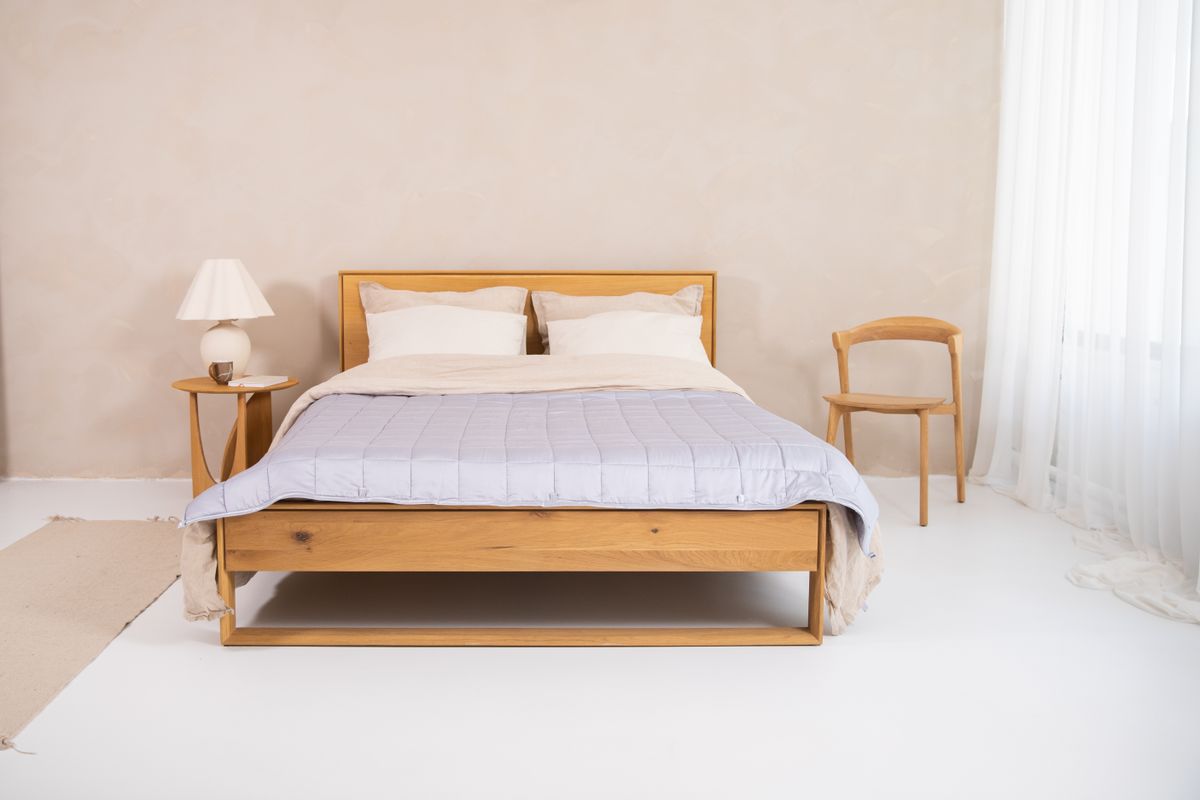
Thuma The Bed is the frame we point people to when they want wood, minimal hardware, and a quiet night. The joints use a Japanese joinery system, so the corners lock together without visible bolts, and the company mills the frame from repurposed rubberwood. Instead of a tall headboard you get a low pillowboard that doubles as a backrest for reading.
The trade-offs are the price and the look: it’s the most expensive frame in this comparison, and the low, warm-wood aesthetic won’t suit a room built around tall furniture. If your bedroom style leans Scandinavian or Japandi, it’s the strongest match here. Our nightstand buying guide covers matching furniture heights to a low-profile frame like this one.
Zinus Arnav Metal Platform Bed — best budget pick
Zinus Arnav Metal Platform Bed is a steel frame with wooden slats that costs a fraction of the Thuma. It ships in one box, goes together with a wrench and about an hour of patience, and stands taller than most platform frames, which adds storage room underneath.
Steel frames have two known weaknesses: creaking under movement if bolts work loose, and a utilitarian look that shows unless your bedding drapes to the floor. Tightening the bolts once or twice a year solves the first, and a long valance solves the second. For a guest room, a first apartment, or any situation where the frame needs to be replaceable, this is the sensible choice — see also our first apartment essentials checklist.
Casper Repose Bed Frame — best upholstered pick
Casper Repose Bed Frame takes a different route: a fabric-wrapped wood frame with a padded headboard, aimed at people who sit up in bed. The slat system is steel-reinforced wood, and the whole thing assembles with fewer separate pieces than the Zinus.
The honest downside is maintenance. Fabric panels collect dust, and spot-cleaning upholstery is fussy compared with wiping down wood or steel. It’s also the middle option on price — cheaper than the Thuma, pricier than the Zinus — so the pick only makes sense if the soft headboard genuinely matters to how you use the bed.
How to choose between them
| Frame | Material | Best for | Watch out for |
|---|---|---|---|
| Thuma The Bed | Repurposed wood | Design-led bedrooms, quiet sleep | Highest price of the three |
| Zinus Arnav | Steel + wood slats | Budgets, guest rooms, tall storage needs | Bolt maintenance, plain look |
| Casper Repose | Upholstered wood | Sitting up in bed, soft headboards | Fabric care over years |
Slat spacing matters more than most buyers realize. Most memory foam and hybrid mattress warranties require slats no more than about three inches apart; all three frames here meet that bar, but if you buy a different frame, check the spec before assuming your warranty is safe. Our mattress shopping checklist lists the warranty terms worth reading before you pay for either piece.
Center support is the difference frames hide in photos. Queen-and-up sizes need a center rail with a leg to the floor; frames that skip it fail in the middle first, and the failure reads as a mattress problem for months before anyone lifts the bedding and looks. It is a thirty-second check on any frame.
Measuring the room before you order
Two heights decide comfort. Total bed height is frame plus mattress, and the ergonomic target is knees at or slightly below hip level when you sit on the edge. Measure a bed you already find comfortable and aim for that number, because mattress thickness alone can swing the total by inches. Platform frames run lower than a bed on a box spring, and a thick mattress on a low frame can land on either side of comfortable.
Then there is the space underneath, the platform frame’s hidden dividend. A seven-inch storage bin needs more than seven inches of clearance, because lids, wheels, and a floor that is not perfectly level all eat into the gap — our under-bed storage review lists the exact heights that matter. Plan walking room too: two feet of clearance on each side of the bed is the common planning floor, and a door that swings inward eats more.
Check the wall side as well. A low pillowboard or an upholstered headboard sits against the wall permanently, so outlets and switches behind the bed need to stay reachable. Frames that hold the mattress a hand’s width off the wall leave room for a charging strip; a tight fit buries the outlet where nothing plugs into it.
Headboard math matters for pillows. A headboard that rises well above the mattress top supports sitting up to read; a pillowboard level with the mattress needs the wall behind it or it is decoration. Neither is wrong, but pillows pushed against a low board slide off all night, worth knowing before the room is arranged around it.
Assembly footprint is the measurement nobody takes. Long side rails need a few feet of clear floor to be joined, boxes arrive stacked and heavy, and a frame assembled in the hallway will not turn the corner into the room. Clear the assembly space before the boxes arrive, not after.
Keeping a frame quiet for years
Frame noise is almost always a joint, and joints loosen on a schedule. Bolts bed in during the first weeks of nightly use, so a retighten around month one prevents most of the squeaks people blame on cheap frames. A yearly pass after that keeps them quiet.
The second source is slats rubbing. A slat that rocks in its bracket or grinds against the frame rail creaks with every position change, and a strip of felt tape or a thin sheet of rubber shelf liner under each slat silences it. Steel frames transmit squeak through bolted connections; wood frames creak as humidity cycles the joints in and out of tight. Neither is a defect. Both are maintenance.
Diagnose before you fix. Press down on the mattress at different points and listen: a creak that moves with pressure is a slat, one that repeats at the corners is a bolt, and one under the middle is the center rail. Ten minutes of locating saves an afternoon of padding the wrong joints.
One cause hides below the frame. A center support leg can slowly press into soft carpet until the slats tilt, and the noise then comes from the mattress bridging a dip. A furniture pad or a hardwood offcut under the leg levels it again.
Floor contact causes the rock people mistake for a broken frame. A frame standing on an uneven floor twists at every load change; self-adhesive furniture pads under each foot level short differences and protect the finish underneath. On hard floors, the pads also stop the slow walk a frame makes across the room over months.
Seasonal checkups take minutes. When the clocks change, walk the frame: retighten bolts, listen for new creaks under hand pressure, and confirm the slats still sit in their brackets. The habit costs less time than replacing a cracked slat.
How each material ages after five years
Wood frames creak as humidity swells and shrinks the joints, loosen gradually at the corners, and show every scratch — but scratches wax out, and loose joints tighten back. A well-made wooden frame is the only one of the three that can be reglued and returned to something like new condition.
Steel is structurally the least mortal. The metal does not fatigue under normal bedroom loads, so the failure points are bolts, which tighten, and finish, which chips. Rust shows up mainly in humid rooms or against exterior walls that sweat in winter.
Upholstery ages where hands and feet touch it. Headboard edges go shiny or thin, spot cleaning leaves darker patches, and fabric has no repair short of re-covering. Choose a color and weave that read as lived-in from year one, because that is where they are headed.
Weight belongs in the purchase decision because it comes back on moving day. Steel frames with wooden slats disassemble into the lightest carries, upholstered frames are the heaviest for their size, and solid wood lands between. A frame you cannot get down the stairwell alone is a frame you will pay someone to move.
Finish and materials deserve a sniff test where possible. Engineered wood components in budget frames carry a faint factory smell that airs out in days; solid wood with an oil or wax finish smells like the wood. Neither is a defect, but a frame destined for a small bedroom benefits from a week of airing near a window before the mattress goes on.
Slat quality varies inside every material camp, too. Thin metal slats flex and spring under weight; wide wooden slats stay flat and hold felt tape better. Whatever the frame, the slats are the part the mattress actually touches, and upgrades there are cheap.
What we’d skip
Framed beds that include a “free” box spring are usually selling you the box spring twice — platform slats do the same job. And any frame advertising itself on weight capacity alone should publish the number clearly; frames that don’t list a capacity are a pass for heavier sleepers.
The same skepticism applies to frames sold as part of a mattress bundle. The frame in those bundles is usually the cheapest component of the package, and swapping it for a standalone pick costs little next to the bundle price. Buy the mattress on its own merits and the frame on its own merits; the discount for taking both together is smaller than it looks.
Layer recap
Specs first, owners second. Check the layer you are about to buy against the layers above and below it — most bad reviews are mismatches, not bad products.
- Foundation
- Slat spacing and center support decide whether the mattress above keeps its shape. Read the foundation guide
- Support
- Firmness is a 1–10 scale, not a feeling — read it by weight and sleep position. Read the support guide
- Comfort
- A topper fixes one specific problem. Anything over 2 in only changes surface feel. Read the comfort guide
- Warmth
- Fill power means nothing without fill weight beside it. Read the warmth guide
- Surface
- Weave, staple length and GSM — then read the wash count, not the thread count. Read the surface guide
- Finish
- Loft has to match sleep position, and it has to come back overnight. Read the finish guide
Bed Layers, Decoded puts all six layers on one page — the numbers worth checking, the marketing traps, and how to read owner feedback before you order.
Top picks
We may earn a commission when you buy through links in this section — your price stays the same.
Best overall
Thuma The Bed
Repurposed wood, Japanese joinery, and a pillowboard instead of a headboard — the quietest, cleanest-looking frame of the three.
- Material:
- Repurposed wood
- Assembly:
- Joinery, minimal hardware
- Headboard:
- Low pillowboard
Best value
Zinus Arnav Metal Platform Bed
A steel frame with wooden slats that costs a fraction of the rest — the obvious choice for guest rooms and first apartments.
- Material:
- Steel frame, wood slats
- Assembly:
- Bolt-together, ~1 hour
- Headboard:
- None
Best upholstered
Casper Repose Bed Frame
A fabric-wrapped frame with a padded headboard, built for people who actually sit up in bed to read.
- Material:
- Upholstered wood
- Assembly:
- Few pieces, tool-light
- Headboard:
- Padded, fabric-wrapped
Comparison
| Specification | Thuma The Bed | Zinus Arnav Metal Platform Bed | Casper Repose Bed Frame |
|---|---|---|---|
| Material | Repurposed wood | Steel + wood slats | Upholstered wood |
| Box spring needed | No | No | No |
| Headboard | Pillowboard | None | Padded fabric |
| Assembly | Joinery, minimal tools | Bolt-together | Few pieces, tool-light |
| Best for | Design-led bedrooms | Budgets & guest rooms | Reading in bed |