Bedroom Furniture
Nightstand Height Is a Mattress Measurement: Getting the Reach Right
A nightstand should be level with your mattress top, hold what your hands reach for, and never require you to lean. Here's how to pick one.
By Ruth Alder · ·
A nightstand earns its keep in the first week. If the top sits level with your mattress and the drawer swallows the phone cable, you stop noticing the piece is there, which is the point. This guide covers the height rule, storage, charging, and the measurements that keep a stand from crowding the bed.
Start from the mattress line
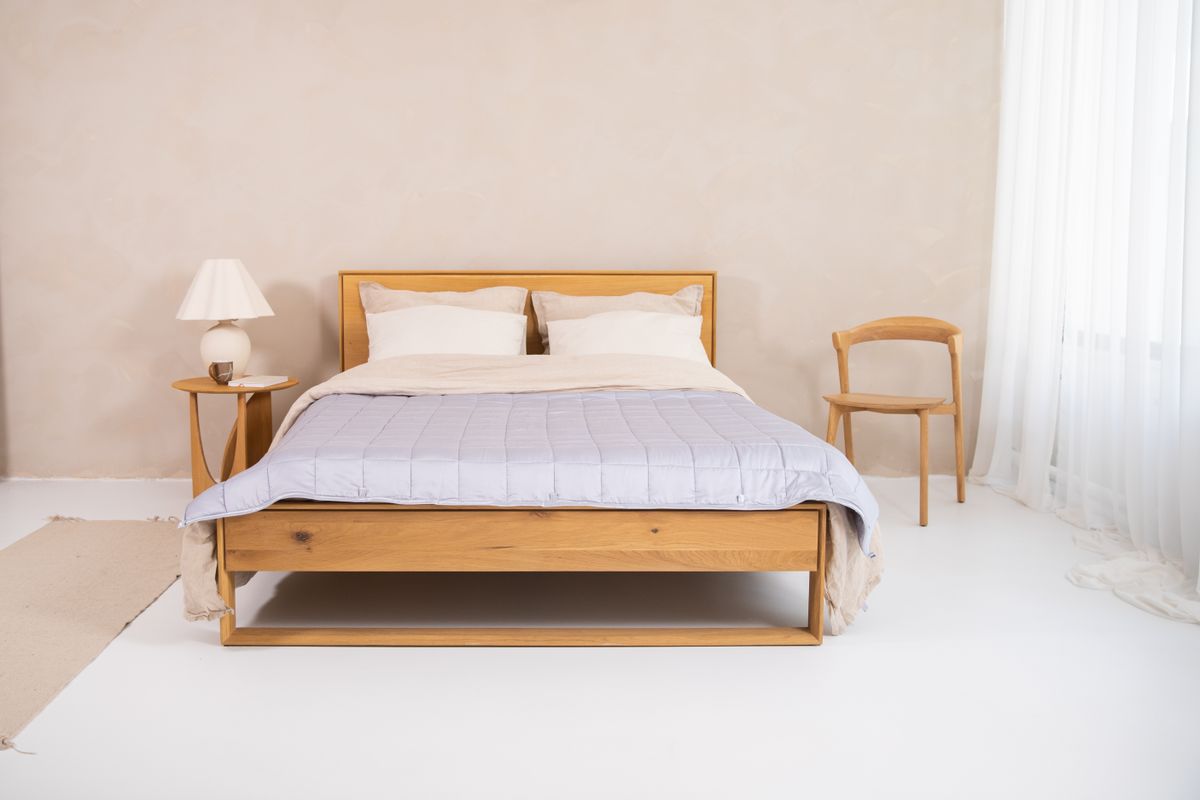
The rule: your nightstand’s top surface should sit level with your mattress top, or one to two inches above it. Measure from the floor to the top of the mattress, not the bed frame. Platform beds sit lower than frames with box springs, so a stand that worked on your old bed may suddenly be too tall.
Level-with-mattress works because it puts a glass of water and your phone on the same plane as your hand when you’re lying down. No reaching up, no leaning down. If you love a stand that’s slightly too short, a stack of hardcovers rescues it. If it’s too tall, nothing fixes it; don’t buy a nightstand you have to look up at from bed.
Measure twice at different corners of the bed. Mattresses sit unevenly on older frames, and an inch of sag on one side is enough to make a stand read wrong.
Drawers, shelves, or open surface
Pick storage by what your hands actually reach for at night and first thing in the morning:
- One drawer is enough for most people: chargers, lip balm, medications, the TV remote, a notepad. A single drawer keeps the bedside surface from becoming a shelf of clutter.
- Two drawers suit people who keep real supplies bedside — reading glasses plus a second pair, tissue, hand cream, spare cables.
- Open shelf is the minimalist choice and the easiest to fill with visual noise. It works best when you commit to a one-book rule.
- No storage at all (a simple pedestal or stool) is fine for a guest room where the bedside load is a phone and nothing else.
Drawer depth matters more than drawer count. A shallow drawer holds cables and lip balm but loses the fight against a paperback and a pair of glasses, so check interior depth on the spec drawing before you order, not after.
If you share a bed, two matching stands beat one shared wide table — you each get your own reach zone, and nobody’s items migrate across the middle.
The charging question
Plan any nightstand you buy today around cables, even if you don’t use them yet. The clean solutions, in order of effort:
- A grommet or rear cutout routes the cable down the back and out of sight — check that the model has one, or budget for a small cable hole you drill yourself.
- A charging station inside a drawer keeps the phone out of sight at night; several nightstands now ship with a built-in USB port or wireless pad, which is convenient but adds an electronic part that can age faster than the furniture.
- A separate bedside charging shelf works if you’d rather not drill anything.
Look at where the cutout sits on the drawing. A grommet near the back wall hides the cable at lamp height; one at the top edge does nothing for a charger that lives in the drawer below.
Avoid the cable-over-the-corner look; it’s the difference between a bedside that feels finished and one that reads as temporary.
The top surface has a job
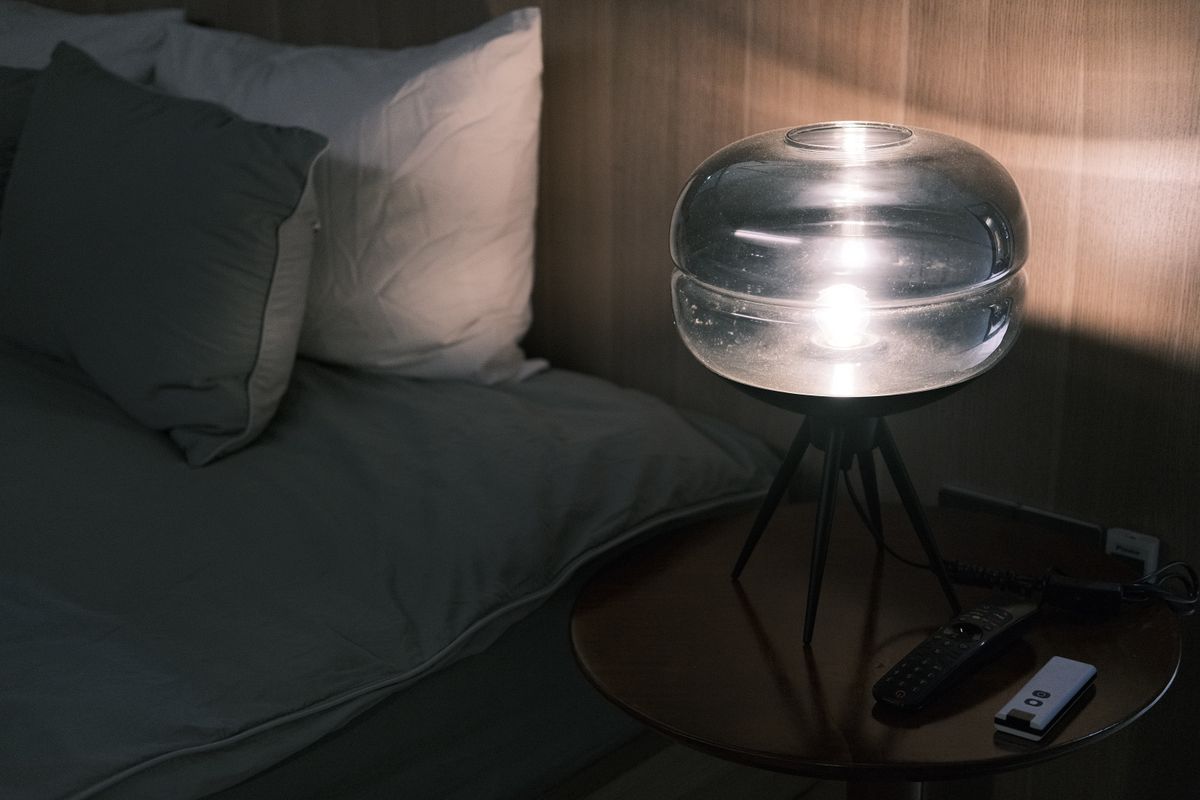
Give the lamp a fixed spot at the back corner and leave the front edge for the things that move: your phone, a glass of water, whatever book is open. If the surface fills with hand cream and pill bottles by Thursday, the drawer is full rather than the stand too small. That is the signal to move up to two drawers instead of shopping for a wider top.
Water rings come from glasses set down without a coaster. Sealed and lacquered tops shrug them off; raw wood does not. A weekly wipe settles the finish question either way.
Style and material, briefly
Wood matches nearly every bedroom; painted stands bring color that bedding can echo. Metal-framed stands look light and suit small rooms — see our small bedroom layout guide for how furniture weight affects a room visually. Avoid glossy white tops if you’re heavy on hand cream and potions: they show rings unless you wipe them weekly.
For pairing with a specific bed, match height first and wood tone second — a slight tone difference reads as intentional, while a height mismatch reads as a mistake. Our platform bed frame review notes stand heights that pair with low frames.
Sizes that work
For a standard bed, a nightstand 18 to 24 inches wide handles the lamp, the phone, and whatever book is open without crowding. Narrower than 16 inches and the lamp fights the alarm clock for space; wider than 28 and you have built a second dresser. Depth between 15 and 18 inches keeps it clear of the walkway in smaller rooms.
Before ordering, measure the wall space beside the bed and check the door swing. A stand deep enough to hold the lamp still needs clearance where the door opens into the room, and in tight rooms the door wins every argument. Leave a hand’s width of air between the stand and the mattress edge so sheets and comforters hang without bunching.
Two mistakes that cost a return trip
First: buying on looks and checking height after delivery. The height mismatch is the one flaw nobody’s photo shows and every user notices nightly. Second: ignoring cable routing, then discovering the back panel is finished and stapled. If the model has no grommet or cutout, plan on a rear cable tray or a felt-strip channel before the stand arrives.
A stand that clears the height check, holds your actual bedside load, and routes its cables cleanly becomes furniture you stop thinking about.
Layer recap
Specs first, owners second. Check the layer you are about to buy against the layers above and below it — most bad reviews are mismatches, not bad products.
- Foundation
- Slat spacing and center support decide whether the mattress above keeps its shape. Read the foundation guide
- Support
- Firmness is a 1–10 scale, not a feeling — read it by weight and sleep position. Read the support guide
- Comfort
- A topper fixes one specific problem. Anything over 2 in only changes surface feel. Read the comfort guide
- Warmth
- Fill power means nothing without fill weight beside it. Read the warmth guide
- Surface
- Weave, staple length and GSM — then read the wash count, not the thread count. Read the surface guide
- Finish
- Loft has to match sleep position, and it has to come back overnight. Read the finish guide
Bed Layers, Decoded puts all six layers on one page — the numbers worth checking, the marketing traps, and how to read owner feedback before you order.
FAQ
What height should a nightstand be? +
Level with the top of your mattress, or one to two inches above it. Measure from the floor to the mattress top, not the frame. That height puts a glass of water and your phone on the same plane as your hand when you are lying down, with no reaching up or leaning down.
Do nightstands need drawers? +
Only if clutter gathers on yours. A drawer hides glasses, chargers and small items, which suits most people. If you keep nothing but a book and a lamp, an open shelf or simple stool works and usually costs less. Pick storage based on what your hands actually reach for at night.
How wide should a nightstand be? +
Between 18 and 24 inches for most bedrooms. Wider pieces hold a lamp plus a book comfortably; anything over 24 inches starts crowding the bed in smaller rooms. Leave at least 2 inches of air between the nightstand and the mattress edge so bedding can hang naturally.