Organization
Small Closet Organization: A System for Tiny Wardrobes
A small closet works when every item has a fixed zone and the hangers match. Here is a four-zone system for tiny wardrobes, plus the seasonal swap routine that keeps it holding.
By the Snug Casa editors · ·
A small closet fails for one reason: it holds more than one season of clothing in a space designed for less. The fix is not more products — it is a fixed four-zone layout, uniform hangers, and a twice-yearly swap that moves off-season items out entirely. Do those three things and even a 3-foot reach-in holds a functional wardrobe.
Zone 1: the rod, doubled
Most small closets waste the rod’s vertical space. Install a second rod about 42 inches below the first — a double-hang setup roughly doubles hanging capacity for shirts and folded-over pants, which make up most wardrobes. Keep long items (dresses, coats) on one side of the lower rod only, and accept that they block that column.
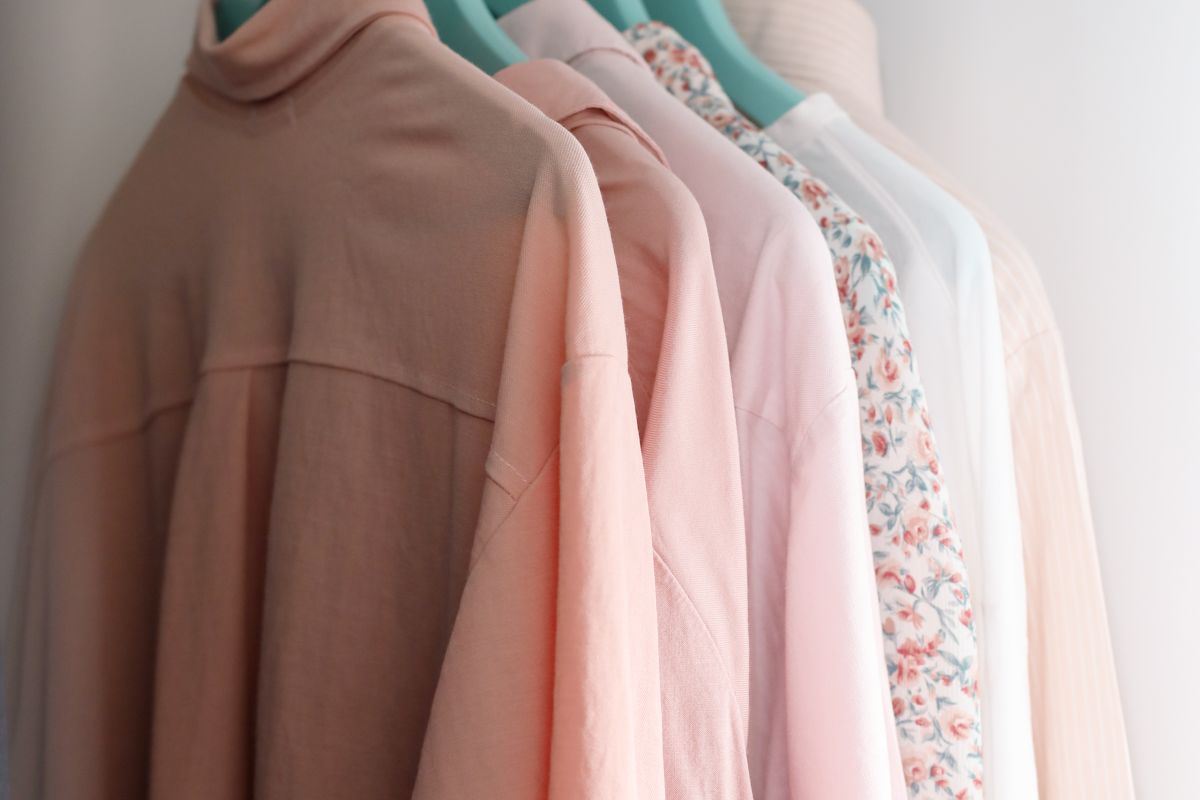
Then standardize hangers. Slim velvet hangers reclaim 20 to 30 percent of rod space versus mismatched plastic and dry-cleaner wire. Everything faces the same direction, and the rod gets one rule: if it cannot hang with an inch of air on each side, something must leave.
Zone 2: floor and the under-used gap
The floor is a bin zone, not a standing zone. One low, wide bin for shoes with daily rotation, nothing else. If your closet has exposed floor beside the door frame, a narrow vertical unit — shoe tower or stacked drawer cart — uses the dead space without eating hanging width.
Zone 3: the top shelf, labeled
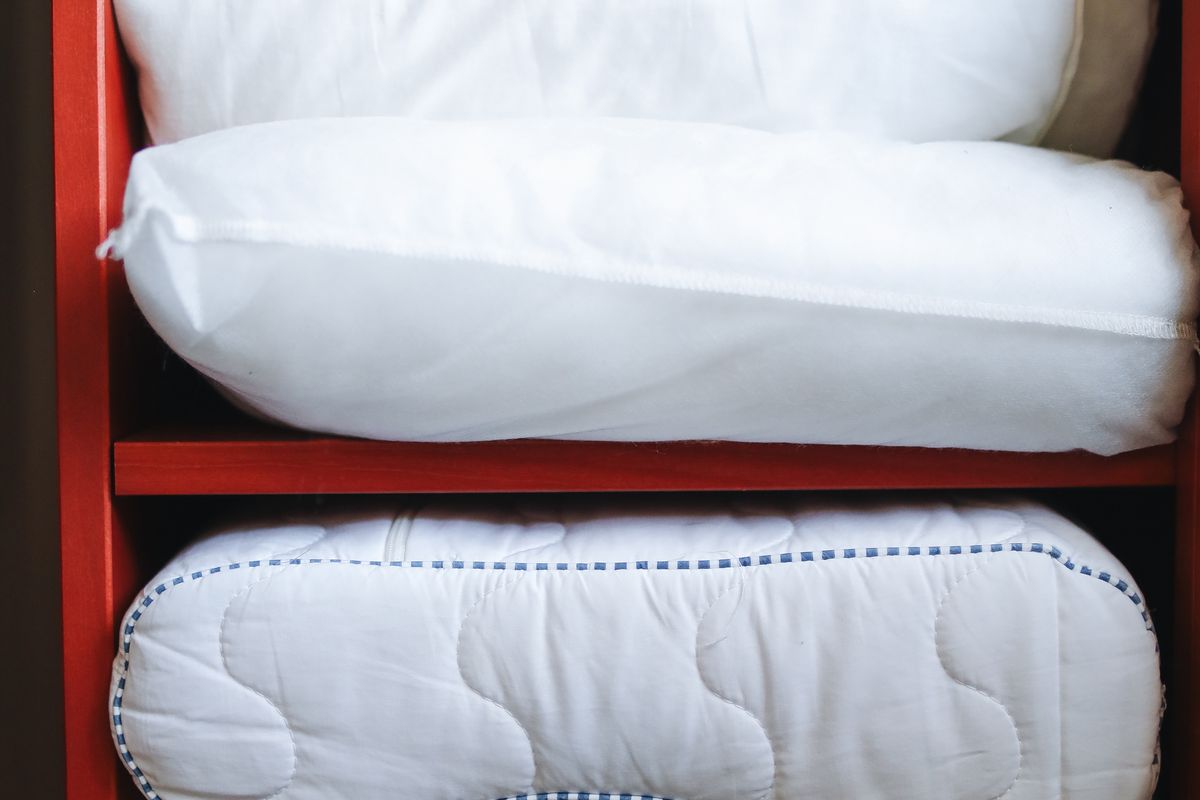
The top shelf holds the things you reach for monthly, not weekly: bags, hats, spare bedding, off-season accessories. Use matching bins with a label on the spine, because an unlabeled high shelf decays into a dead zone within a month. Soft bags sag and hide their contents; structured bins keep their edge and their label readable. Under-bed containers pair well here for bedding — our under-bed storage picks cover that side of the system.
Zone 4: the door and the walls
Over-the-door hooks take belts, bags and tomorrow’s outfit off the rod entirely. Inside-wall adhesive hooks hold scarves or jewelry at eye level. Keep door storage to light items only; a loaded door rack twists the hinges and scrapes the frame.
The seasonal swap
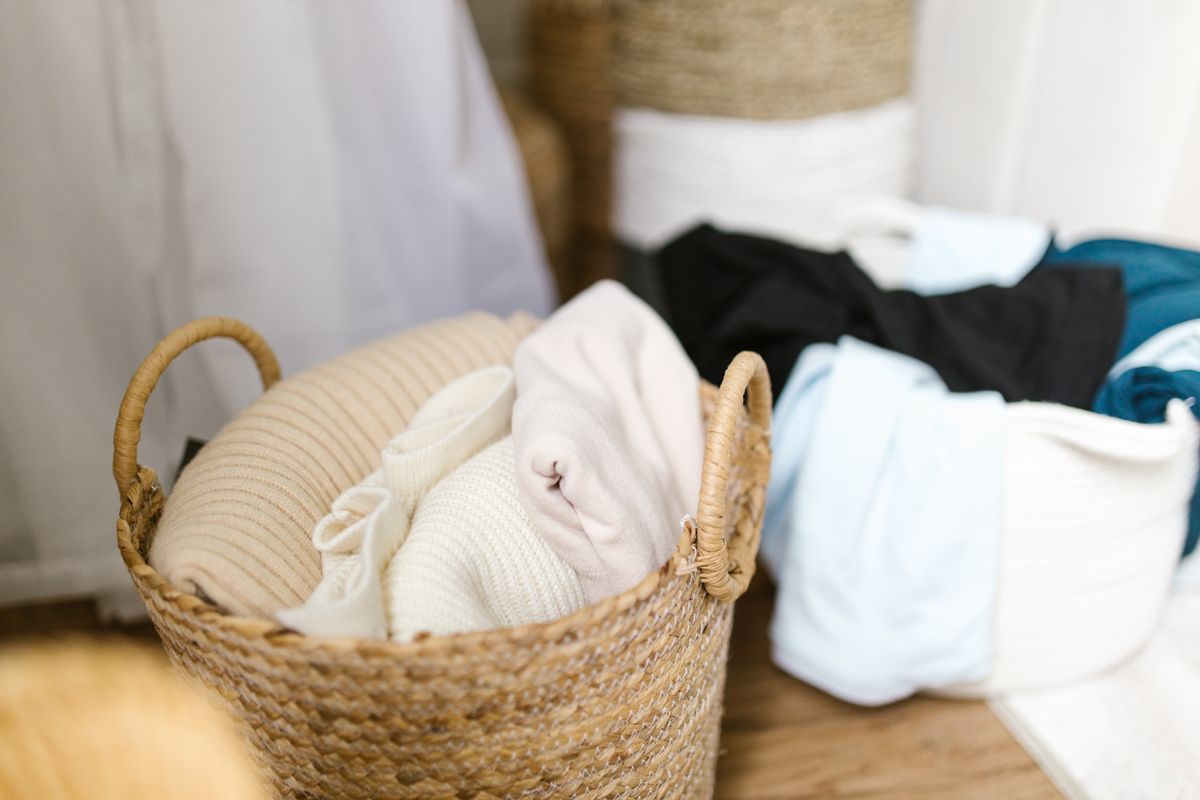
Twice a year — spring and fall — pull everything off-season out of the closet completely. Vacuum bags or lidded bins go under the bed or on a garage shelf, not the top shelf of the same small closet. This is the step people skip, and it is the reason the system resets: the closet only has to hold one season to feel roomy. Fold off-season knits rather than hanging them; our linen closet organization guide covers folding methods that keep shelf stacks from toppling.
If the swap reveals clothes you did not wear all season, run them through a declutter pass before they earn shelf space again — our bedroom declutter checklist is a 15-minute-per-zone version of that.
FAQ
How do I organize a closet that is only 24 inches deep? +
Use slim hangers and face everything the same direction so clothes hang flush against the back wall. Keep nothing on the floor except one low bin. If hangers touch the closet door, switch the rod to a two-tier double-hang setup to double capacity without adding depth.
Are matching hangers really necessary? +
Not for looks alone. Bulky dry-cleaner hangers and mismatched plastic ones waste 2 to 4 inches of rod per foot, which in a small closet means an entire shelf of clothes. Uniform slim velvet hangers typically reclaim 20 to 30 percent of rod space.
What should I do with off-season clothes in a small closet? +
Store them outside the closet entirely: vacuum bags or lidded bins under the bed, or labeled boxes on a high shelf. A small closet only works when it holds roughly one season of clothing at a time, not the whole year.