Bedroom Furniture
Headboards: Height, Mounting Types, and What Fits Your Frame
Headboard heights run 40 to 70 inches, and four mounting types decide what fits which frame. The measurements to check before ordering, including the ceiling you forgot to measure.
By Ruth Alder · ·
A headboard is the one piece of bedroom furniture you buy for the room, not the bed. The mattress has to fit your body; the headboard has to fit the wall behind the bed and the height you read at. That is why headboard returns happen less over looks than hardware — a bolt-on ordered for a hook-on frame, or a 70-inch panel discovered under a 96-inch ceiling. Four numbers settle all of it before checkout.
The four mounting types
Bolt-on is the strongest and most common connection: the headboard’s legs carry threaded holes that line up with the frame’s headboard brackets, and two to four bolts clamp the two together. The catch is spacing — most frames follow standard hole spacing, not all, and an adjustable-bolt kit solves mismatches only if the difference is small.
Hook-on systems use flat plates on the headboard legs that drop into slots on the frame. The plates come in different hole patterns, so hook-on headboard and hook-on frame must still agree on the pattern. This is the type most often bought wrong, because both pieces say “universal” on the box.
Freestanding headboards stand on their own legs behind the bed, pushing against the wall. They ignore the frame entirely — the answer for platform frames without hardware and for adjustable bases, which move at the head and can never share a rigid connection.
Wall-mounted headboards hang on the wall above the floor, usually on a French cleat. The bed then floats in front, shortening the footprint and easing cleaning underneath — at the cost of solid anchors, since a headboard takes real load when someone leans on it reading.
What the mount does under load
Every headboard is a lever. When someone sits up and leans back, their weight pushes the top of the panel away from the bed, and the mounting hardware is what resists it. The connection type decides how well it holds.
Bolts through steel brackets clamp the pieces rigid, which is why bolt-on beds stay quiet for years. Hook-on plates carry the same load in friction between plate and slot, and a connection that starts loose only gets looser — the first sign is a knock from the head of the bed every time someone shifts. Freestanding panels resist through their own legs and the wall behind them, so the bed’s weight pinning them in place is part of the structure. Wall-mounted versions hand the problem to the anchors, which is why that type belongs on studs, never just drywall.
Whatever the type, re-check the hardware after any move of the bed. A mattress dragged across a room loads those joints sideways, and two minutes with a screwdriver after the move is cheaper than a cracked headboard leg later.
Height, from the mattress up
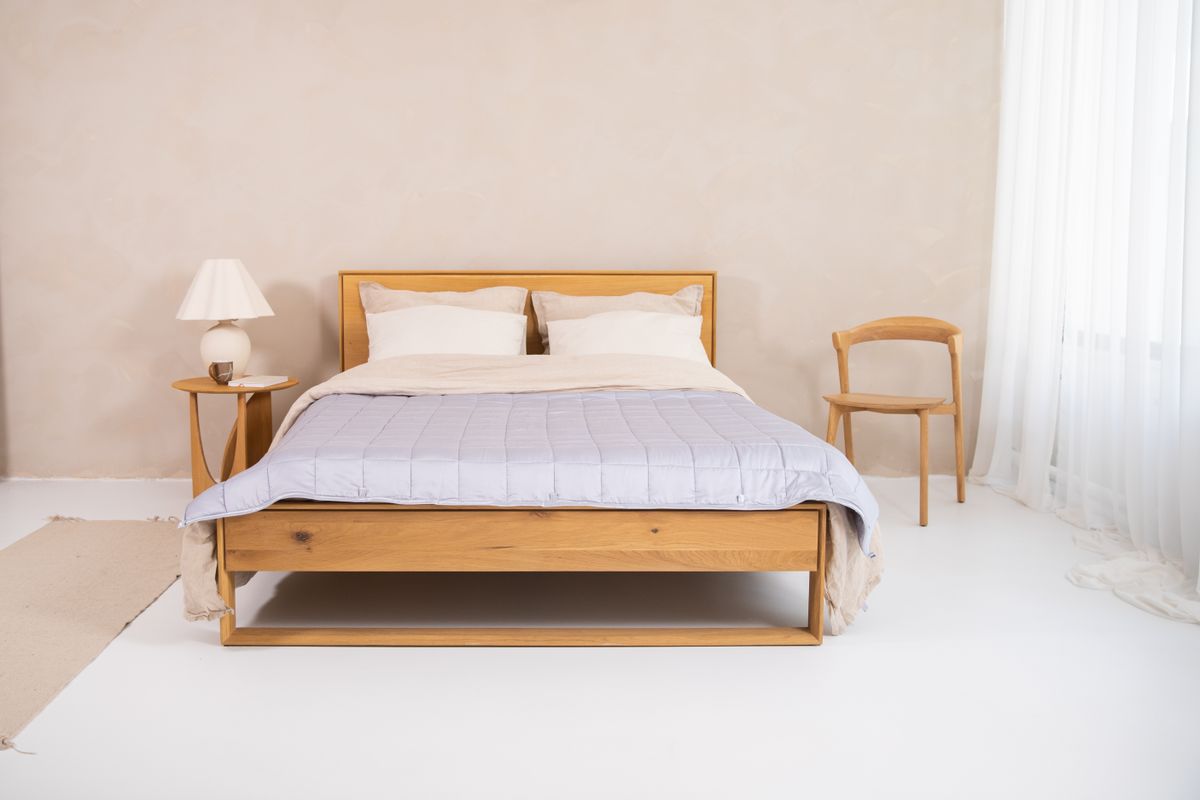
The listed height always means total height, bottom to top — but what you see from the bed is the part above the mattress. Work in the full stack: a low 40-to-48-inch headboard behind a 25-inch bed shows barely a foot of fabric above the pillows. Standard 48-to-56-inch heights show 24 to 32 inches, which suits most rooms. Taller panels, 60 to 70 inches, belong in rooms with high or vaulted ceilings, or beds that sit low.
Then measure upward. A standard ceiling runs 96 inches; the bed stack often claims 20 to 25 of them. Leave a few inches between headboard top and ceiling for the bolts and cleaning. The frame’s height arithmetic is the same one covered in the bed height guide, so one measuring session answers both questions.
Work one example through to see the margins. A 56-inch headboard on a 22-inch bed stack reaches 78 inches, leaving 18 inches of air under a standard ceiling — comfortable. Swap in a 70-inch panel on the same stack and the top sits at 92 inches, six from the ceiling: legal, but the room reads top-heavy and the bolts go in by feel. The same panel over a 15-inch platform bed leaves 26 inches and works. The lesson is that headboard height has no right answer except against the ceiling you measured, which is why that measurement belongs in the pre-checkout list.
Width follows the mattress, almost
Headboards are sized to mattress widths: a queen headboard is built for a 60-inch mattress, a king for 76 inches. Manufacturers usually add an inch or two of rabbet per side so the headboard slightly overlaps the mattress edge. Two cautions. A king headboard on a split king adjustable setup still fits, since two 38-inch twins total the same 76 inches. An antique or full-sized headboard will not stretch to a queen — the frame can adapt, the headboard cannot.
Living without a headboard
Skipping the piece is a legitimate choice, and the bed loses nothing structural. What you lose is the pillow catcher and the wall protector: pillows slide into the gap between mattress and wall, and head oil works into the paint a foot above where you sleep. Pushing the bed flush to the wall solves the pillow problem at the cost of making the bed with your face against the plaster.
A compromise exists for people who want to decide later. Buy the bed first, leave the headboard wall bare, and add a freestanding panel when the room tells you it needs one. Because freestanding designs ignore the frame’s hardware entirely, that later decision never has to match what you bought. Nothing about the bed depends on the headboard; the reverse is what needs checking.
Matching the room
Upholstered panels dampen sound and give reading pillows something forgiving to rest on; wood reads lighter and photographs quieter; metal takes the least visual space in a small room. Whatever the surface, the headboard is part of the bed’s silhouette against the wall, and the wall belongs to the room’s layout — the small bedroom layout rules treat the headboard wall as the anchor wall, and the nightstand guide scales the furniture beside it to the same visual height. Buy all three as one composition, not three separate decisions.
Layer recap
Specs first, owners second. Check the layer you are about to buy against the layers above and below it — most bad reviews are mismatches, not bad products.
- Foundation
- Slat spacing and center support decide whether the mattress above keeps its shape. Read the foundation guide
- Support
- Firmness is a 1–10 scale, not a feeling — read it by weight and sleep position. Read the support guide
- Comfort
- A topper fixes one specific problem. Anything over 2 in only changes surface feel. Read the comfort guide
- Warmth
- Fill power means nothing without fill weight beside it. Read the warmth guide
- Surface
- Weave, staple length and GSM — then read the wash count, not the thread count. Read the surface guide
- Finish
- Loft has to match sleep position, and it has to come back overnight. Read the finish guide
Bed Layers, Decoded puts all six layers on one page — the numbers worth checking, the marketing traps, and how to read owner feedback before you order.
FAQ
Will any headboard fit any bed frame? +
No. Bolt-on headboards need a frame with mounting holes at standard spacing and the right bolts; hook-on plates come in different hole patterns that must match. Freestanding and wall-mounted headboards skip the frame entirely, which makes them the fix for platform frames and adjustable bases that have no headboard hardware at all. Check the frame's manual before ordering — the words 'headboard compatible' in a listing mean nothing without the mount type.
How tall is too tall for a headboard? +
Work backward from the ceiling. A standard 8-foot ceiling leaves 96 inches; add the frame and mattress height, often 20 to 25 inches, and a 60-inch headboard reaches about 85 inches — fine. The common mistake is stacking a tall frame, a thick mattress, and a 70-inch headboard, which leaves the headboard jammed against the ceiling with no room for the mounting bolts.
Do you actually need a headboard? +
Functionally no — its jobs are stopping pillows from sliding into the gap, protecting the wall from head oil, and giving pillows something to lean against for reading. A bed placed against the wall loses the pillow problem but not the oil one. If you skip it, either push the bed flush to the wall or pick up a floor-standing design later; nothing about the bed depends on it.